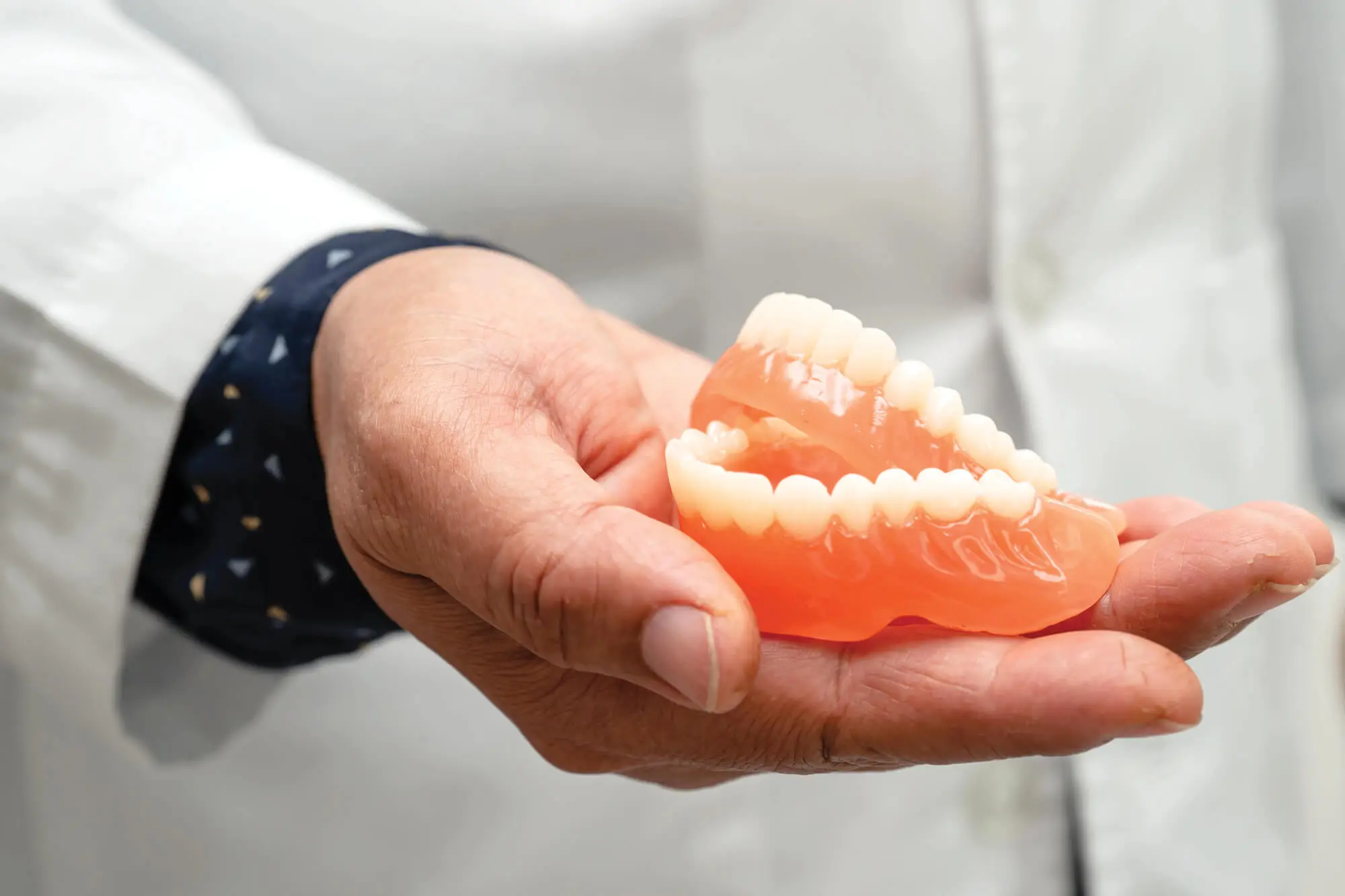
Getting your first set of dentures in Durham, NC, is a big step toward restoring your smile and confidence—but it also comes with a bit of an adjustment period. Many first-time denture wearers experience challenges with slipping or shifting appliances that make speaking clearly and chewing comfortably harder.
Luckily, with a little patience and the right tips, you can adapt quickly to your new restorations and get back to enjoying life.

Understanding Speech Challenges with Dentures
It’s common to notice slight changes in your speech right after getting dentures. You might lisp, slur certain words, or hear a clicking sound while speaking. This happens because your tongue, cheeks, and lips are learning how to move around your new appliance.
Luckily, with practice, you can train your mouth to accommodate it. Some speech exercises you can try include:
- Read out loud daily: Books, newspapers, or even just your grocery list will do. Focus on words with “S,” “F,” and “Th” sounds, as these involve tongue and teeth interaction and can be harder to perform at the beginning.
- Speak slowly and deliberately: This helps control airflow and pronunciation.
- Count from 60 to 90: These numbers challenge your tongue and lips in just the right way.
- Record yourself: Looking at yourself and the way you speak can help you spot improvement and areas to work on.
Don’t worry—most patients notice a significant improvement within a few weeks!
Understanding Eating Challenges with Dentures
Eating can also feel awkward at first, especially if your gums are still adjusting. You can make it easier and more comfortable by:
- Start soft: Begin with soft foods like mashed potatoes, scrambled eggs, oatmeal, or yogurt. Gradually introduce more solid textures as your comfort improves.
- Cut food into smaller pieces: Smaller bites require less force and allow you to chew more evenly. Chew slowly and carefully, using both sides of your mouth to prevent tipping.
- Avoid sticky or hard foods: Sticky foods (like caramel) and hard snacks (like nuts or raw carrots) can dislodge your dentures or irritate your gums. Wait until you’re fully adjusted before trying these again.
- Use denture adhesive: Your dentist may recommend an adhesive during the early stages to help your dentures feel more secure as you build muscle control.
Ensuring a Smooth Transition to Dentures
Dentistry has advanced greatly in the last few years, but dentures remain a reliable, stable solution to severe tooth loss. While adjustment can be hard at the beginning, wearing them consistently and practicing chewing in private will help you gain confidence before dining socially.
If you continue to experience pain, excessive clicking, or poor fit, schedule a follow-up with your dental provider. Ill-fitting dentures can cause sore spots, gum irritation, and longer adjustment times.

Ensure Your Dentures in Durham, NC, Fit Properly
It’s normal to feel a little frustrated once you begin wearing dentures—but it will get better. At Triangle Restorative Dental, we’re here to help you adjust comfortably and confidently to life with dentures.
Whether you need support with fit, speech, or eating, reach out today to book a consultation!